Texas ASLA Graduate Honor Award 2026
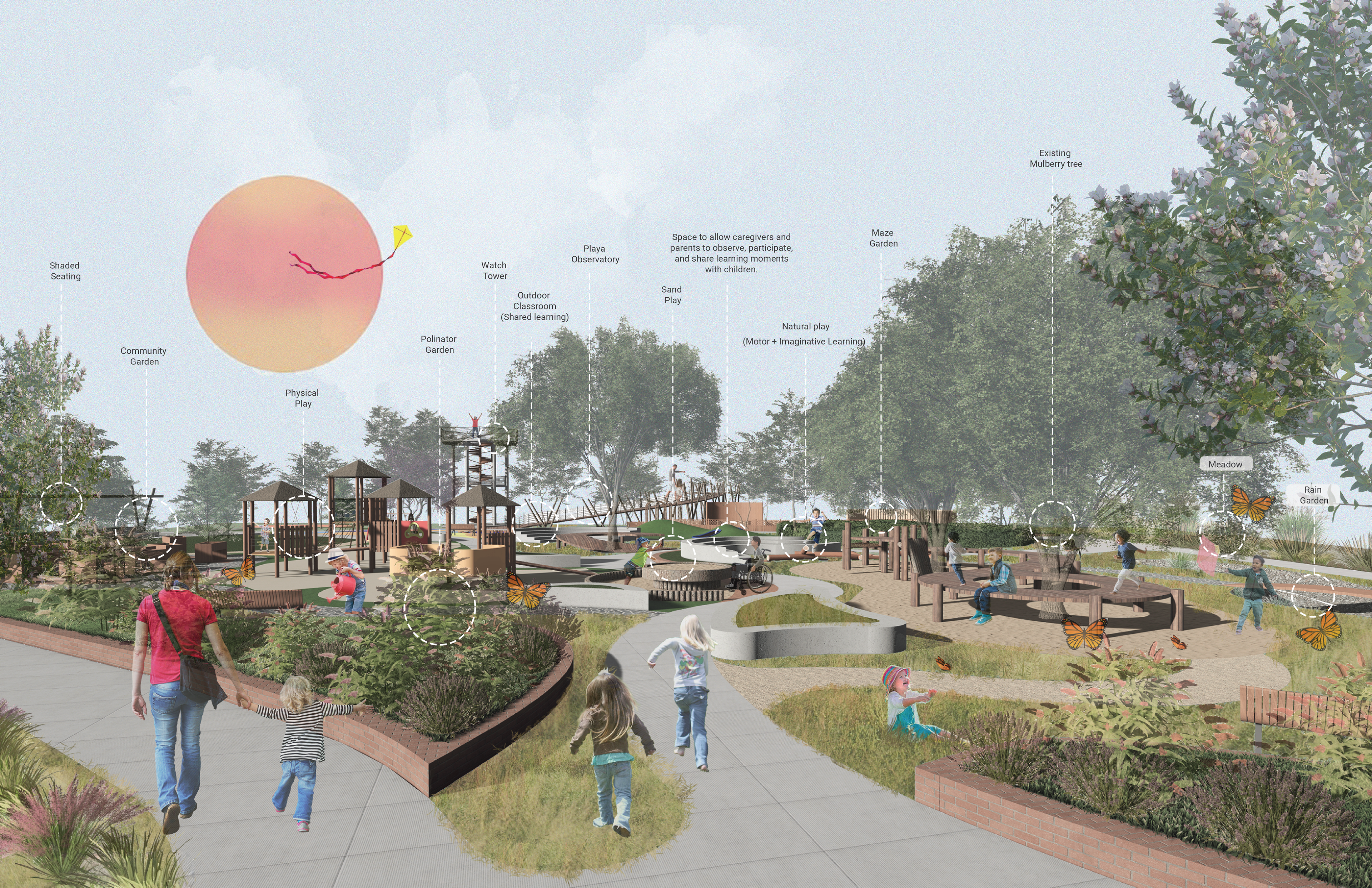
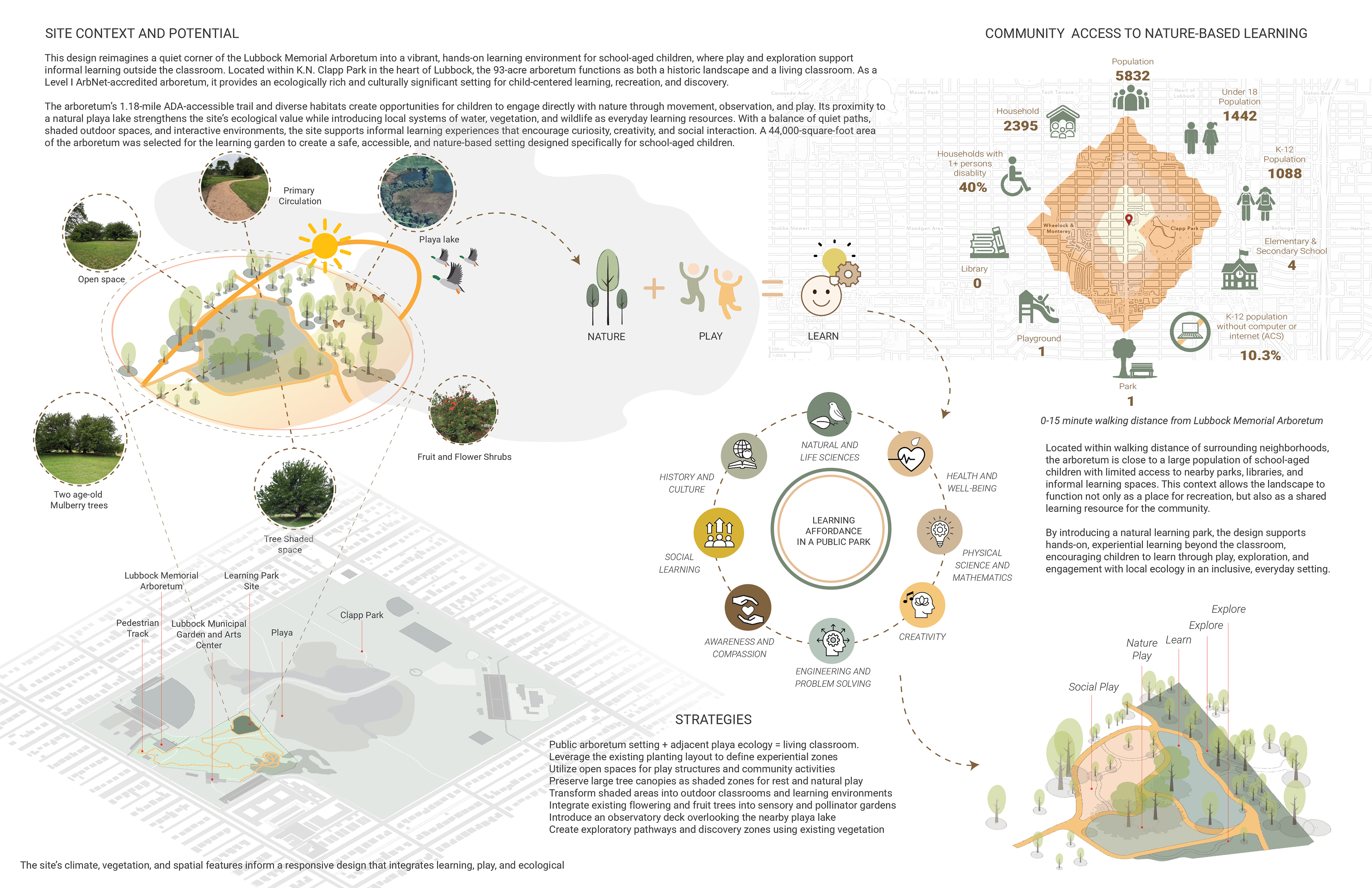
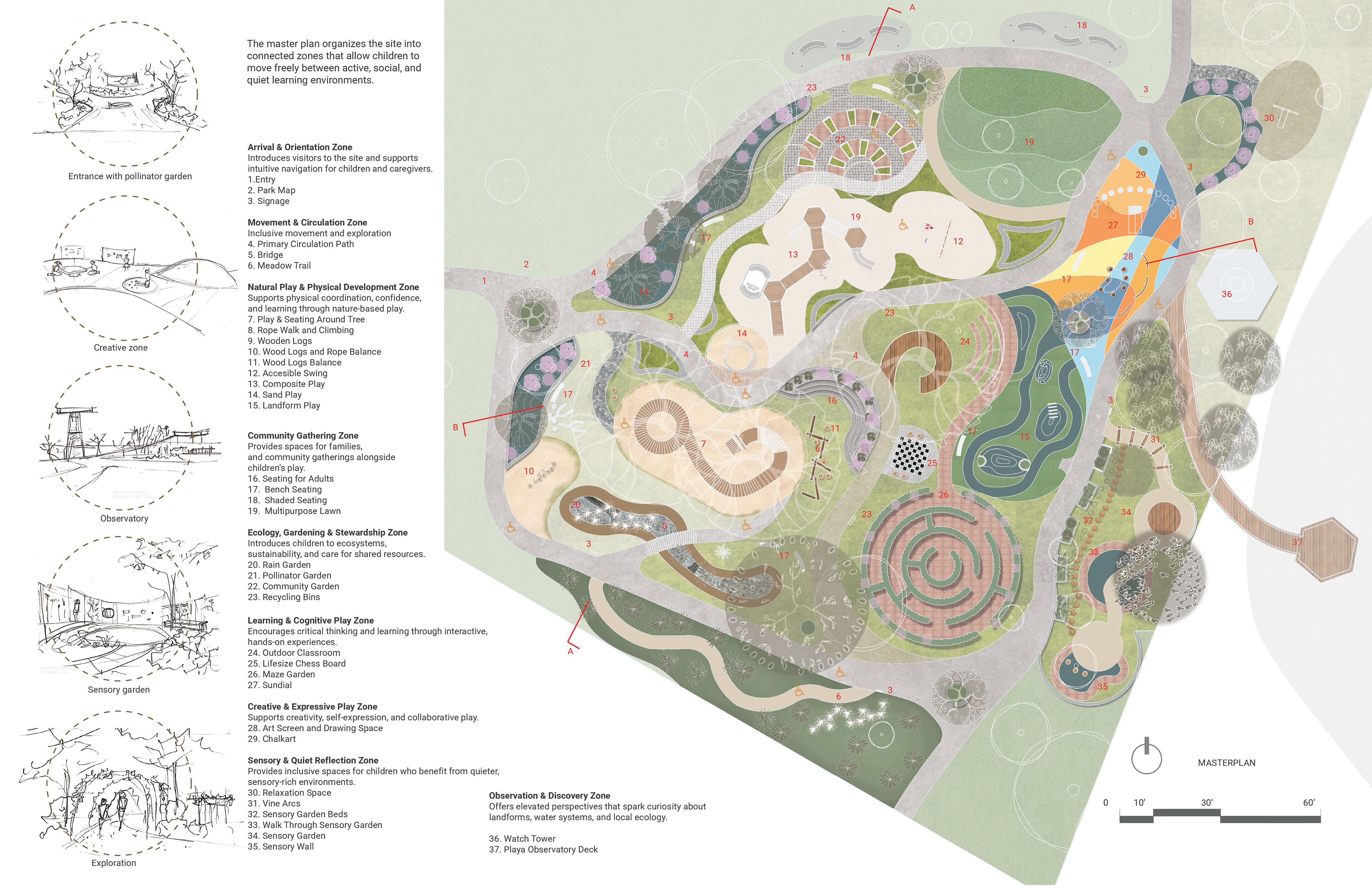
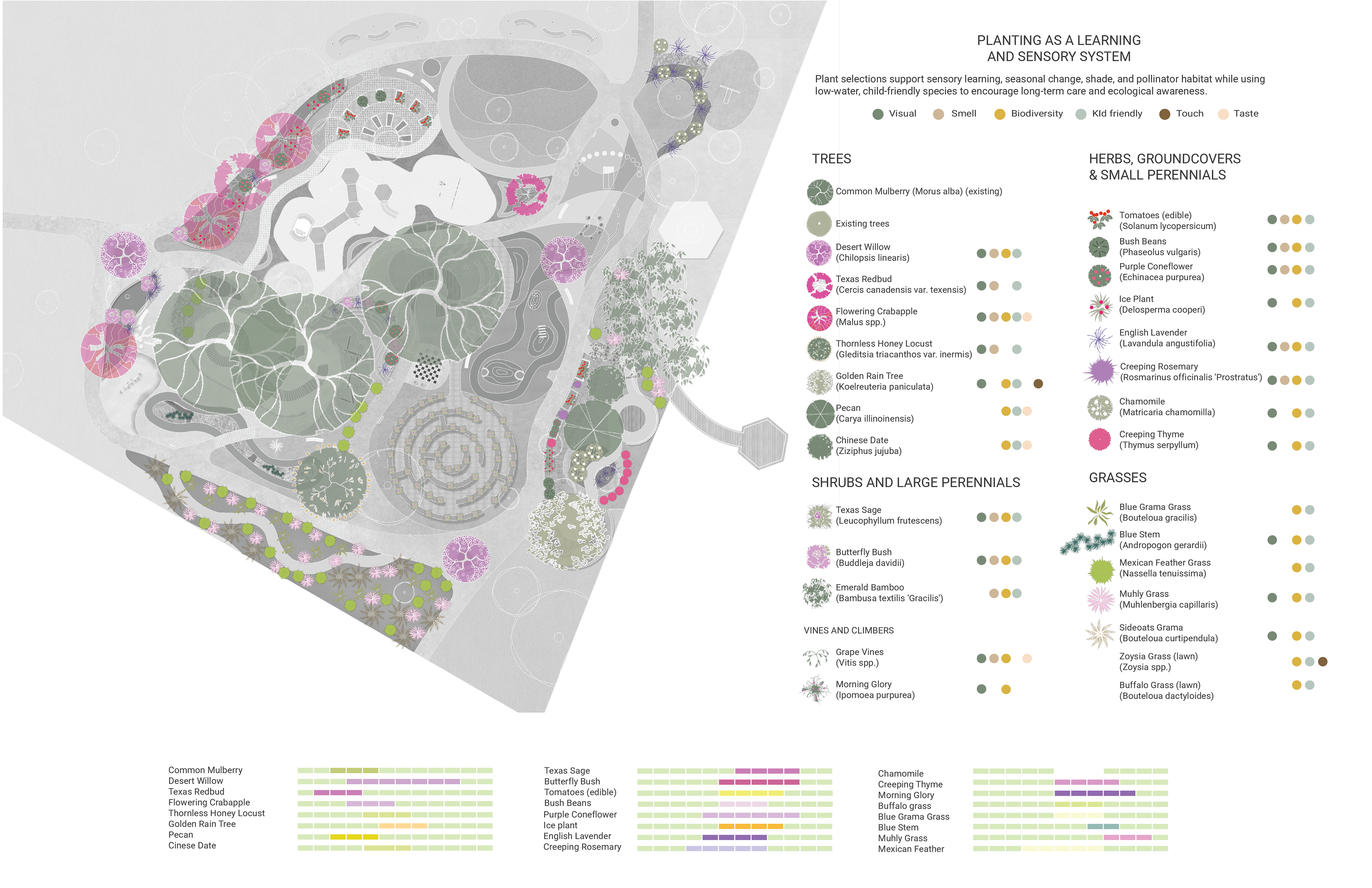
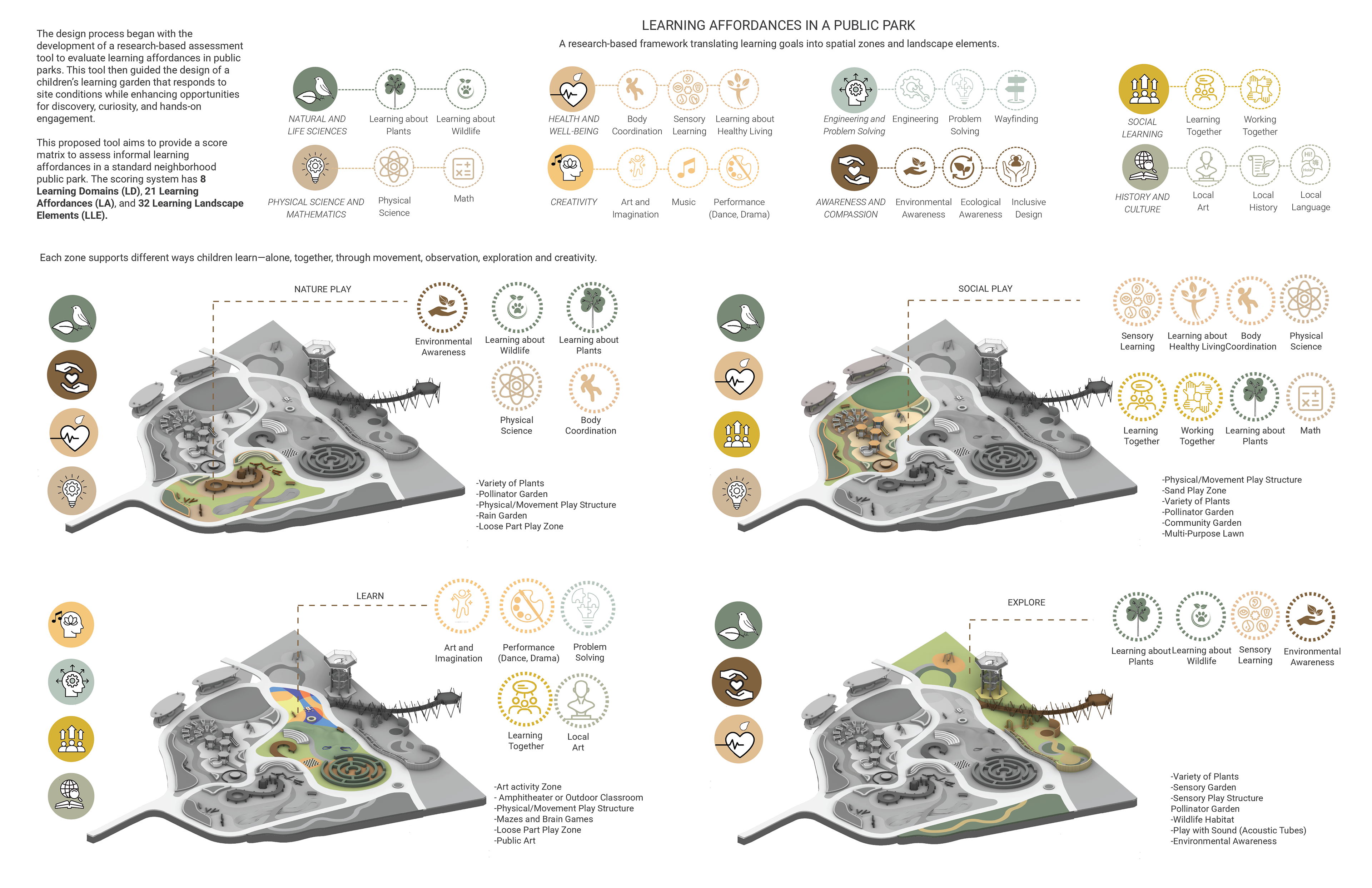
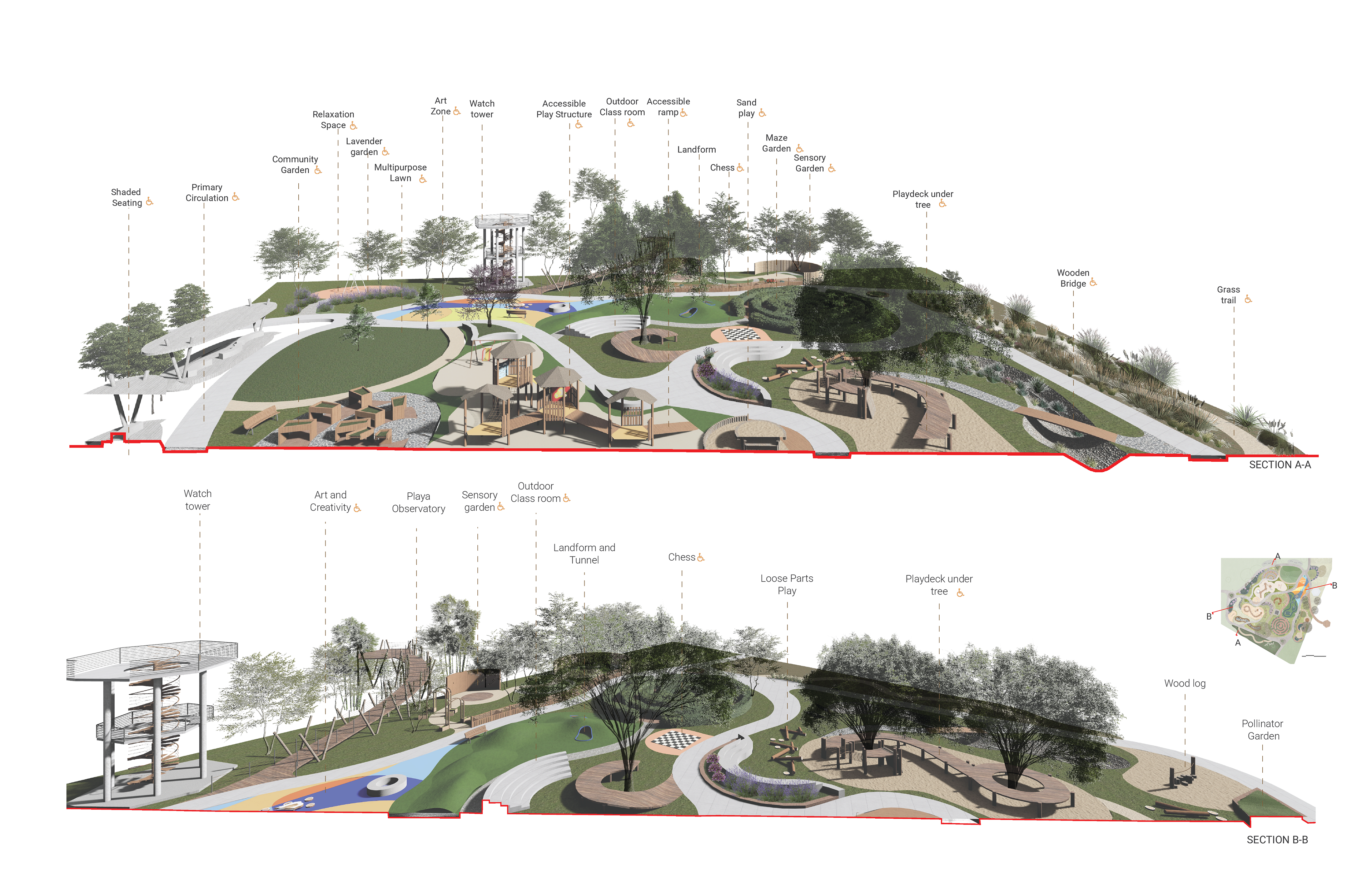
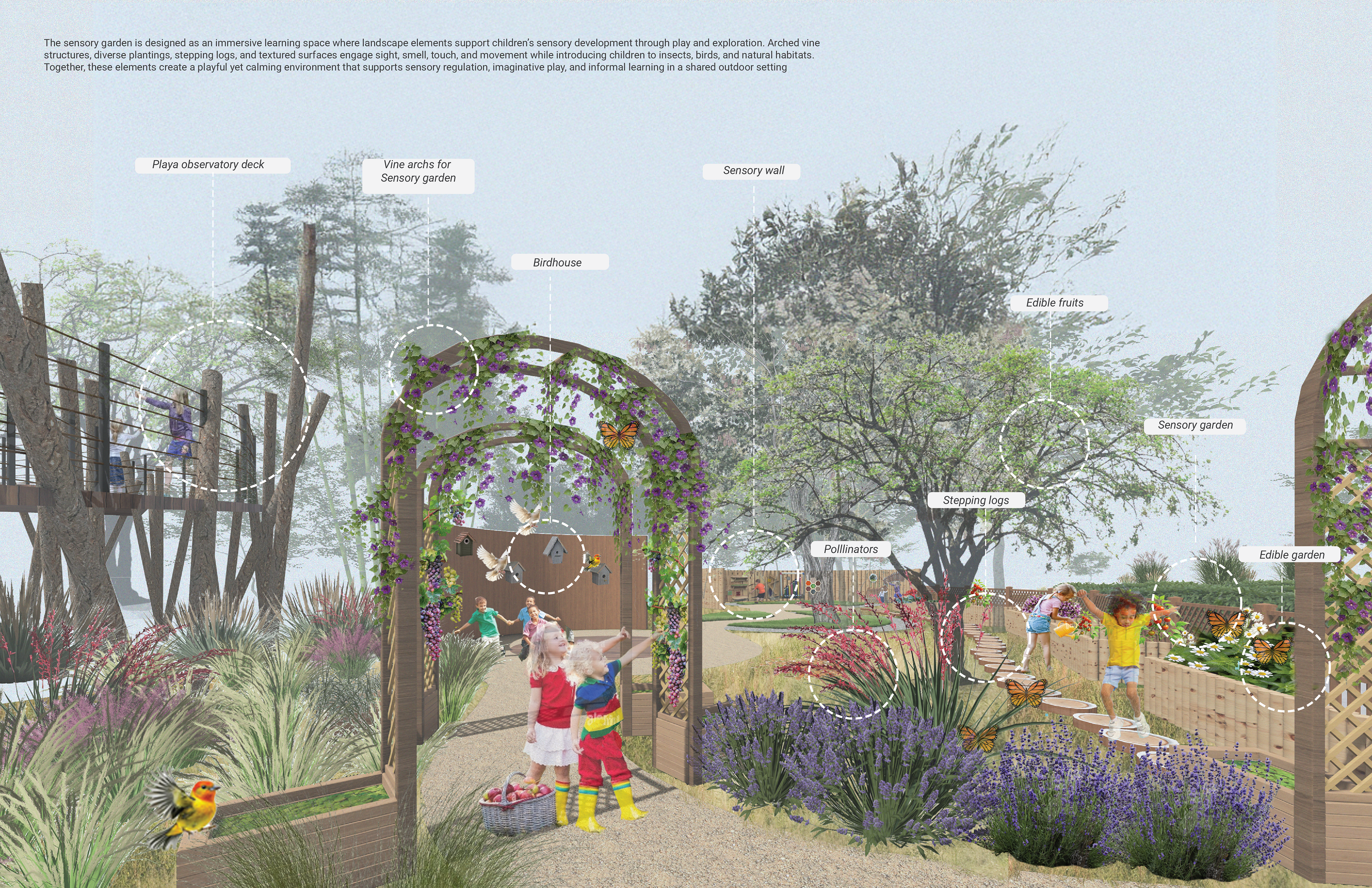
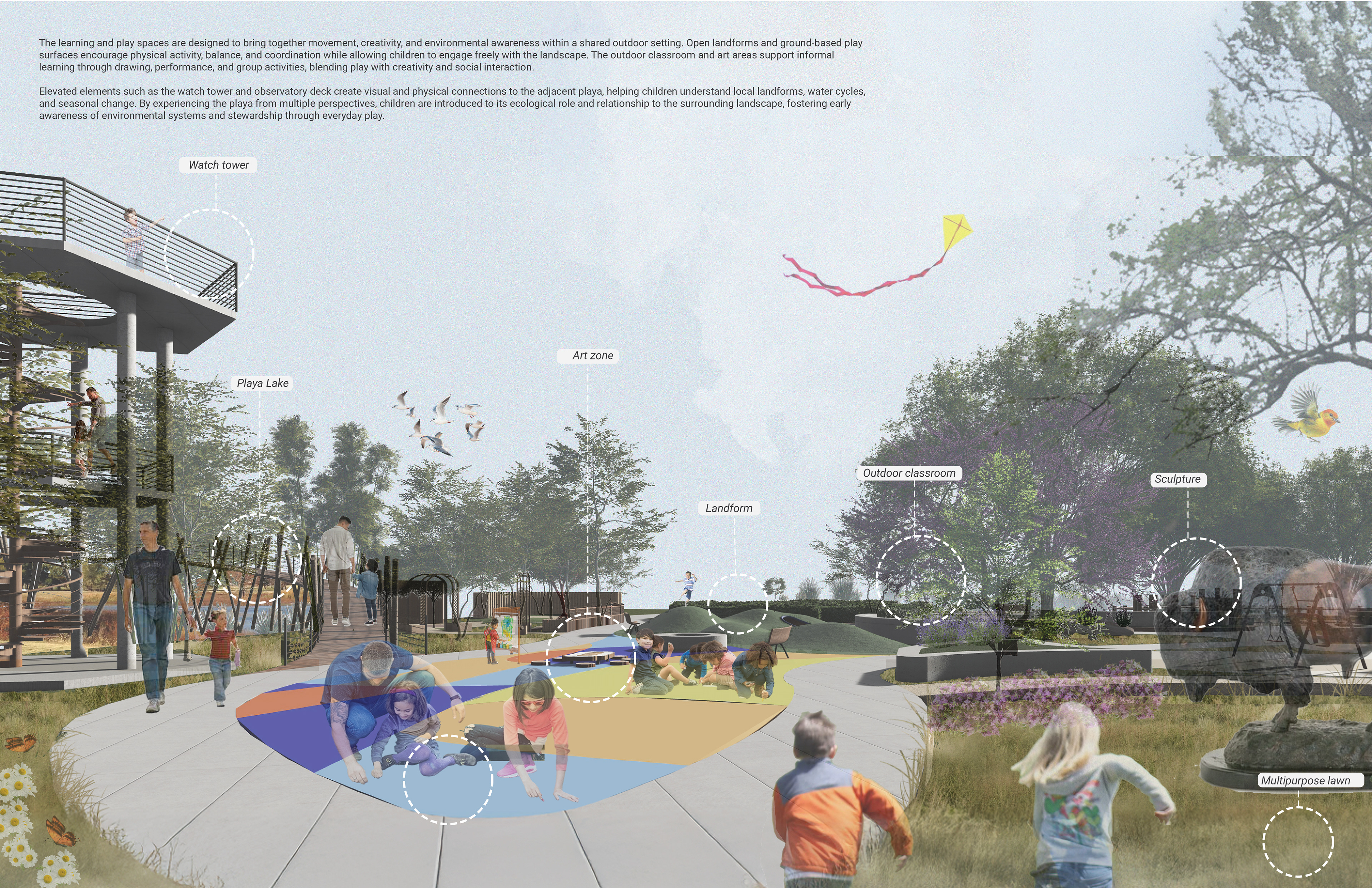
“Play and Grow” is a site-specific landscape design that transforms an underutilized corner of the Lubbock Memorial Arboretum into a nature-based learning garden shaped by landform, planting, circulation, and play. Located adjacent to a natural playa, the project uses existing trees, native vegetation, and local ecological systems as primary design drivers, allowing the landscape itself to become the setting for unexpected discovery and engagement. The design is organized around a continuous, accessible circulation loop that connects a series of nature-inspired zones supporting play, learning, and community gathering. Shaded seating areas, a multipurpose lawn, and shared activity spaces are distributed throughout the site to encourage social interaction, observation, and collective use by children, caregivers, and families. The project embraces informal and experiential learning, allowing children to engage with nature through movement, exploration, creativity, and sensory interaction. Eight learning affordances of public parks have been identified and embedded across multiple landscape elements, including landform play, sensory gardens, outdoor classrooms, art spaces, and interactive pathways. These elements support multipurpose learning by accommodating different learning styles, social dynamics, and levels of activity, enabling children to learn independently, collaboratively, or through shared play. The adjacent playa plays a critical role in shaping the project’s identity. Elevated observation points and framed views introduce children to local landforms, water systems, and seasonal changes, making playa ecology a visible and approachable part of everyday experience. Planting strategies reinforce this connection through carefully selected species chosen for color, texture, seasonal variation, and native adaptability, supporting sensory learning, pollinators, shade, and low-water maintenance. By using natural elements as the primary medium for play, Play and Grow presents an alternative to conventional playgrounds, demonstrating how landscape architecture can provide richer developmental, environmental, and social benefits while creating a resilient public space rooted in place and long-term stewardship.