Texas ASLA Award of Excellence 2026
Mehri Farnaz, Jonathan Gomez, Josue Guerrero, Nesrin Jallad, Emma Shepard
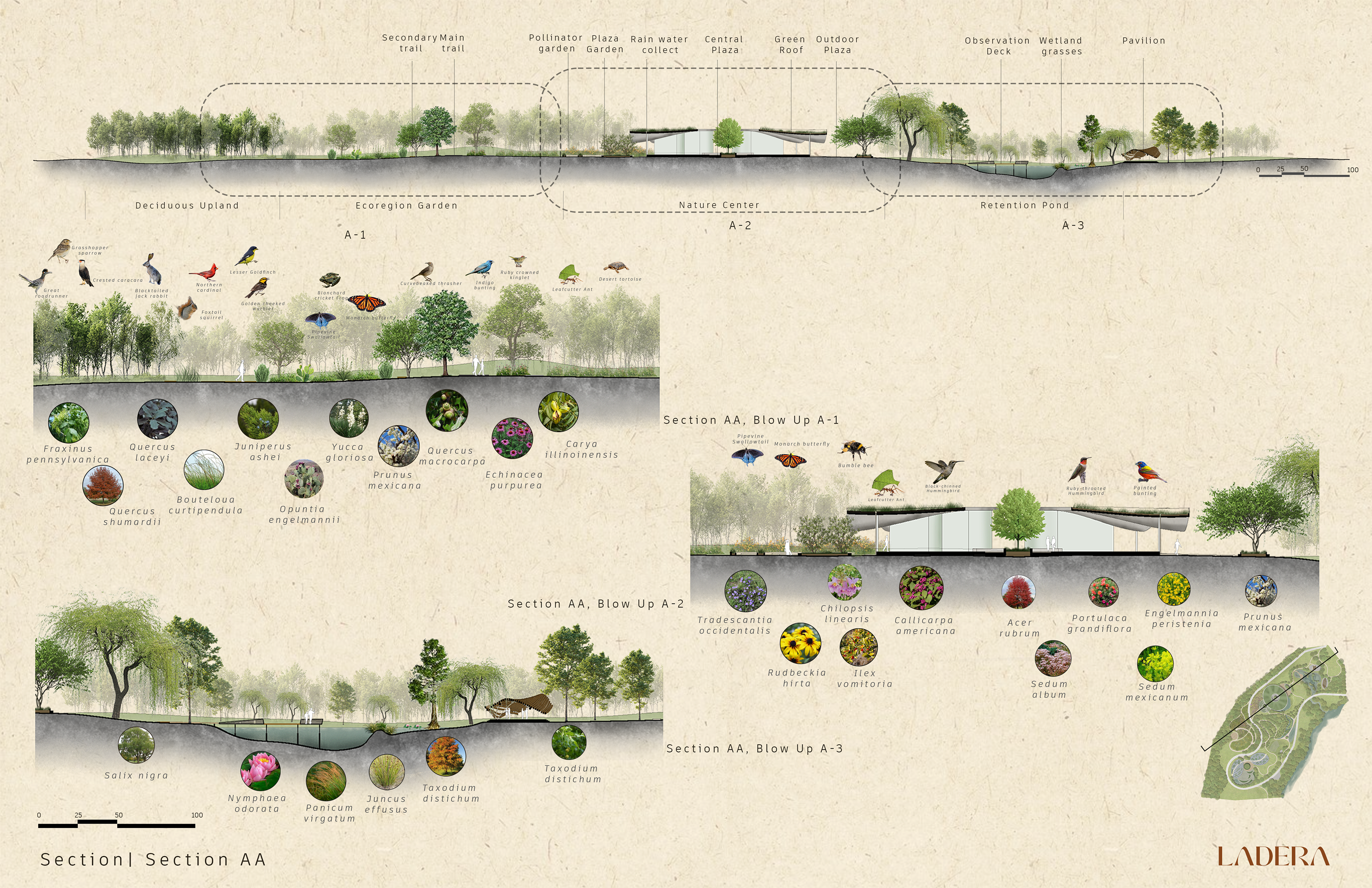
Located along the Salado Creek corridor, the Ladera site sits at the convergence of four Texas ecoregions, offering a rare range of native plant communities. This ecological diversity forms the foundation of an arboretum that is both restorative and experiential, allowing visitors to engage with landscapes shaped by climate and seasonal change.
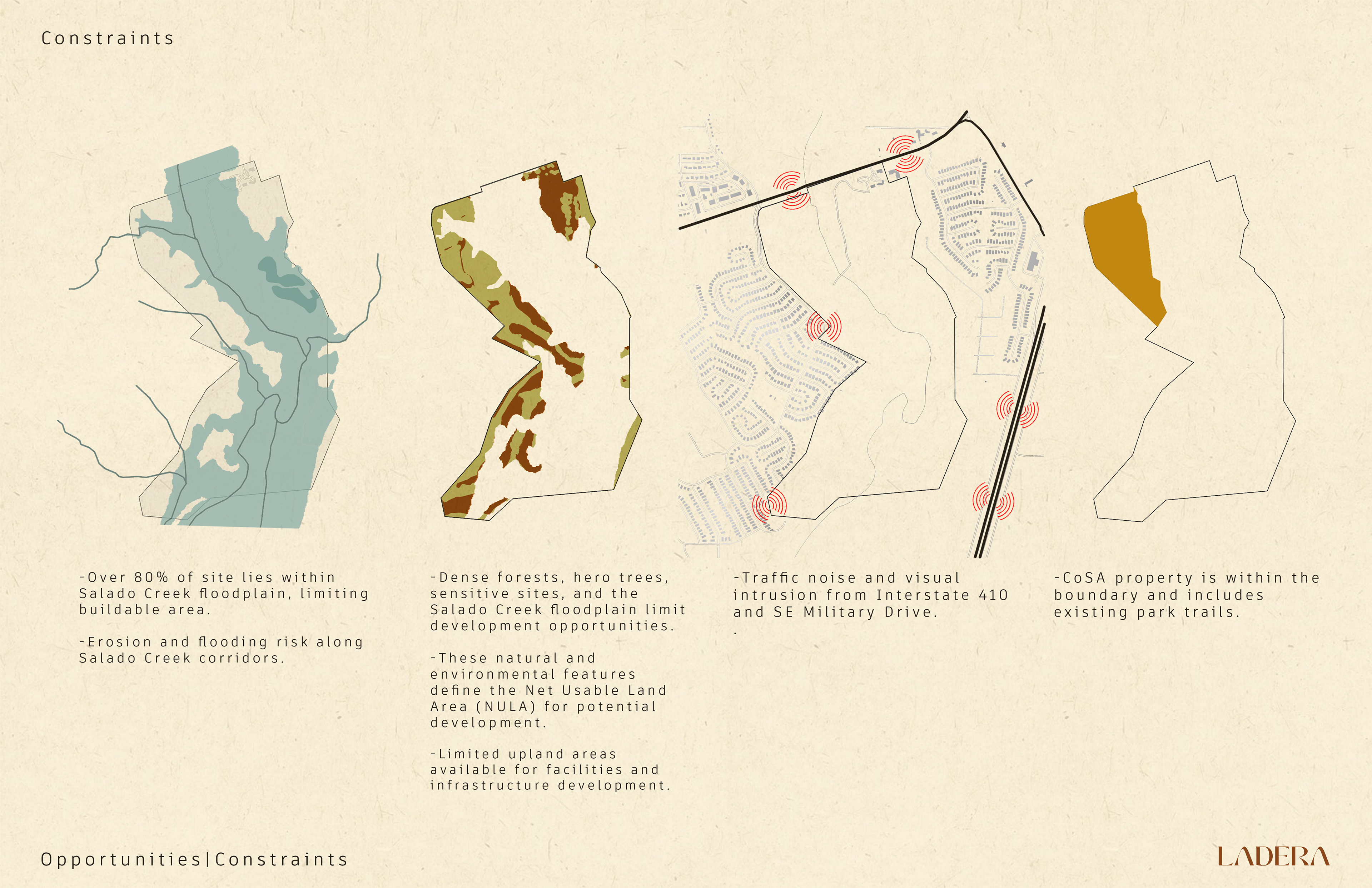
Ecological restoration guides the design approach. Native trees, grasses, and understory plants are used throughout the site to improve soil health, support biodiversity, and strengthen long-term resilience. Stormwater is integrated into the landscape through terraced wetlands, permeable paving, bioswales, seasonal ponds, and regenerative corridors. Inspired by sponge city principles, these systems allow rainwater to spread, slow, and return to the ground, reinforcing natural hydrological cycles.
Ladera is organized into a series of districts that balance activity with conservation. The arrival plaza and cultural amenities create a welcoming threshold into the arboretum. Active education zones and botanical walks transition into shaded woodlands, research areas, and passive learning environments. Existing trees are protected, and boardwalk trails follow organic patterns inspired by natural landforms and ant hill systems.
San Antonio’s culture is translated through material choices, textures, and spatial patterns drawn from local traditions and outdoor gathering spaces. Seasonal transformation shapes the visitor experience, making ecological processes visible and encouraging learning through direct engagement with the landscape.

Credit: Josue Guerrero

Credit: Jonathan Gomez




Credit: Jonathan Gomez
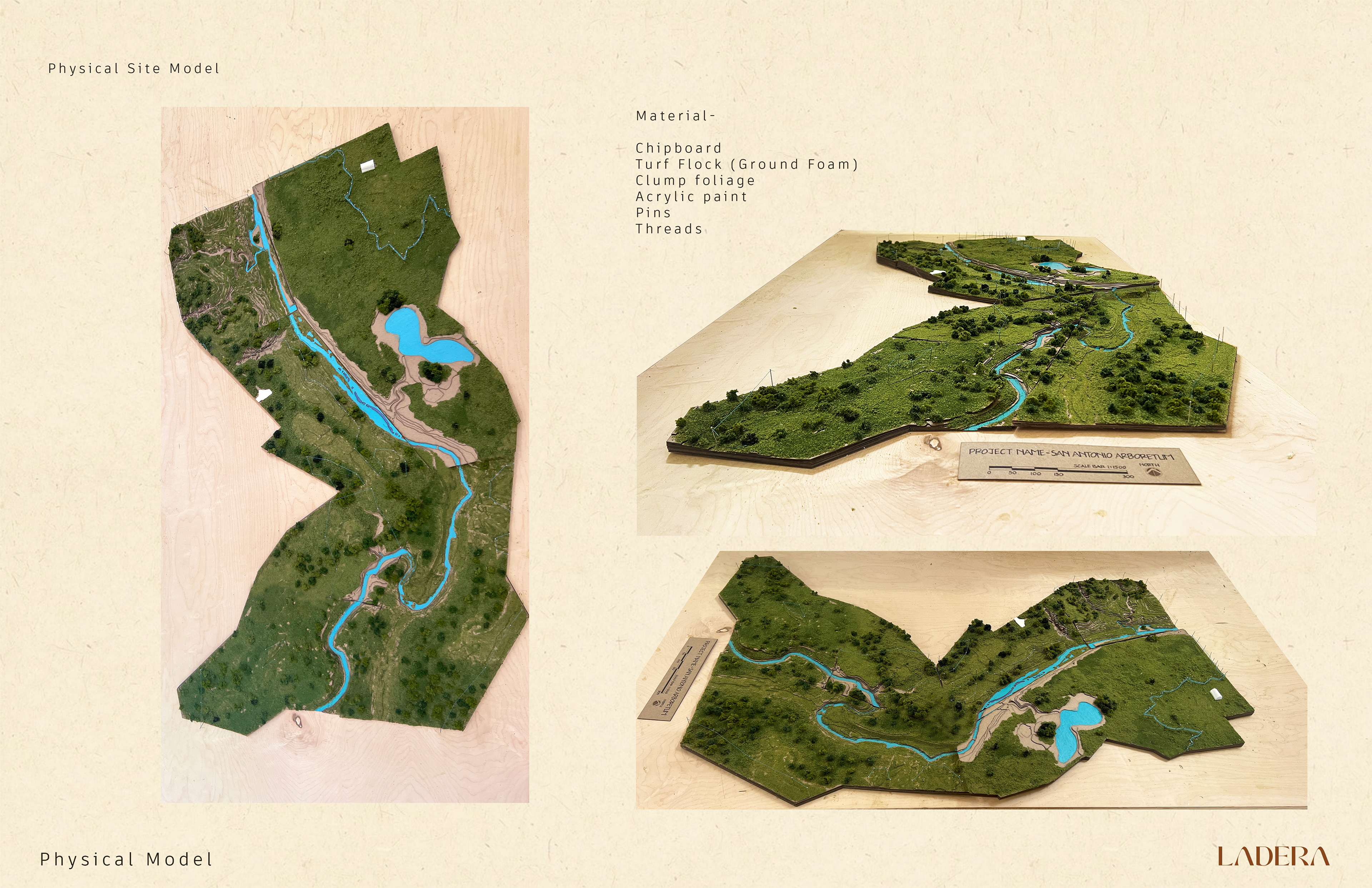

Credit: Jonathan Gomez., Josue Guerrero, Nesrin Jallad

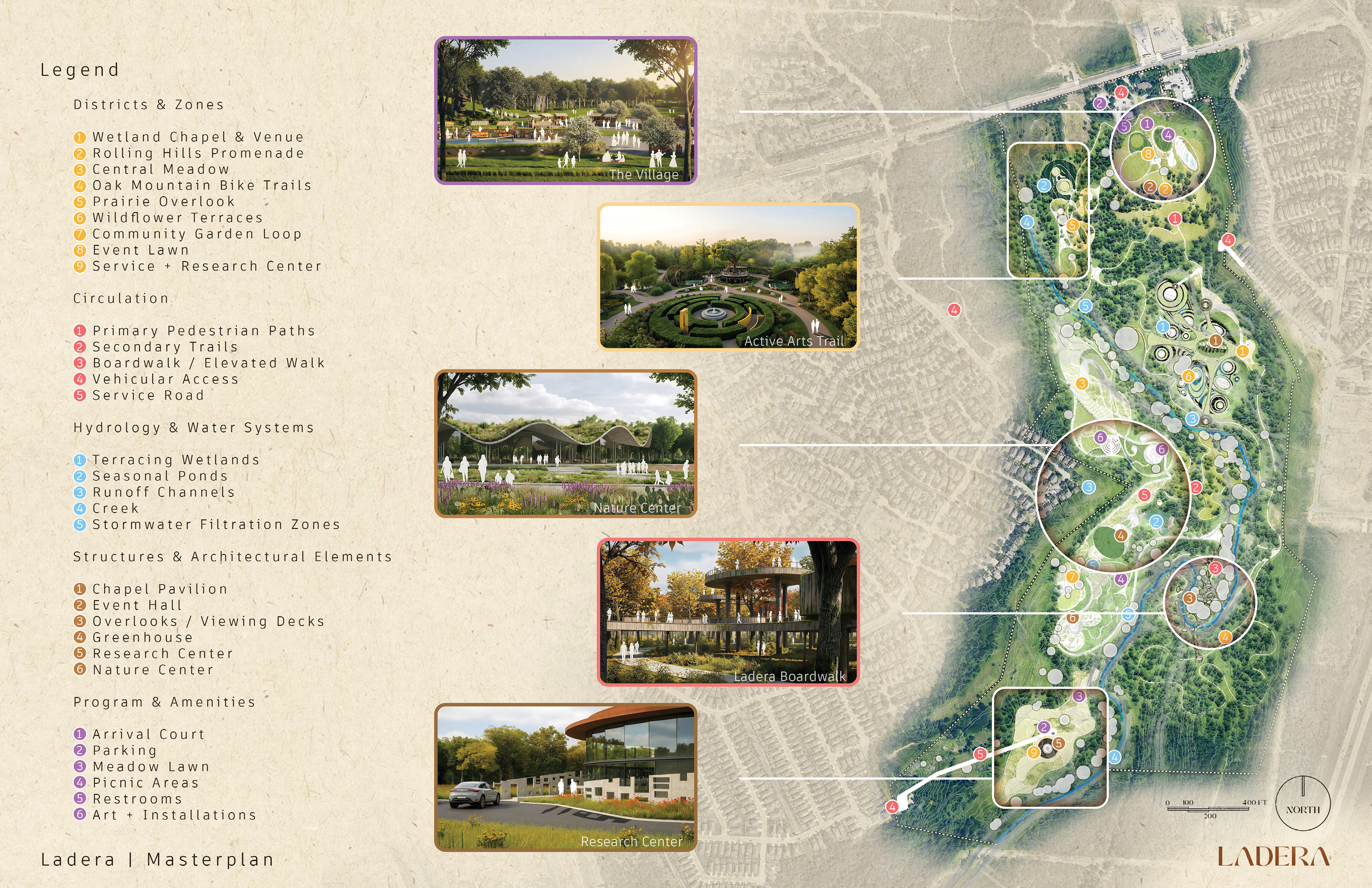
MASTERPLAN DESIGN (GROUP WORK)
INDIVIDUAL SECTION